Tuesday, April 26, 2016
CRI A16
CHINA RADIO INTERNATIONAL A16
Effective March 27, 2016
0000-0057
Cambodian 11990nnn, 9765nnn, 684dof
Cantonese 17490bei, 11820xia
Chinese 13655xia, 13580bei, 12035xia, 11975kun, 11900bei, 11780jin, 9435kun
English 15125bei, 13750bei, 11885xia, 11790xia, 9570cer, 7425kas, 7350kas, 6180kas, 6075kas, 6020cer
Hakka 15100bei, 9610kun, 9550kun, 9460kun
Mongolian 11875bei, 9470xia
Portuguese 9710kas, 9560bei
Russian 9445huh, 7405huh, 1521
Spanish 15120hab, 5990hab
Vietnamese 13770xia, 11770bei, 603dof
0100-0157
Amoy 174950ei, 15425xia, 15100bei, 11980kun, 11945kun, 9610kun, 9550kun, 9460kun
Chinese 15140xia, 13580bei, 11770nnn, 11650uru, 9655nnn, 9560kas
English 15785xia, 15125bei, 11770kas, 9675kas, 9580hab, 9570cer, 9535kas, 9470kas, 6180kas, 6020cer
Russian 13600xia, 5905kas, 1521
Urdu 9695kas, 7240kas
0100-0257
Chinese 15160jin, 13655xia
Spanish 9710kas, 9590kas
0130-0227
Nepalese 13780kun, 11860kun
0200-0227
Pashto 15435xia, 11870kas, 9765kas
0200-0257
Amoy 17490bei, 15425xia
Bengali 11640kun, 9655kun
Chinese 15140bei, 9825kas, 9815kas, 9690E, 9580hab,9570cer, 6020cer
English 13640kas, 11770kas
Hakka 17495bei, 15425xia
Russian 17640xia, 5905kas
Spanish 9710kas, 9595kas
Tamil 17505kun, 15260kas, 13600kas
Urdu 11650kas, 9450kas
0230-0327
Nepalese 13780kun, 11730kun
0300-0357
Chinese 17540bei, 15230xia, 15160jin, 15130bei, 9570cer, 9450kas, 6020cer
English 15785xia, 15120bei, 15110kas, 13590bei, 11770kas, 9790hab, 738msk
Hindi 15350kas, 15210kas, 13720kas, 11640kas
Russian 17710jin, 17640xia, 15435uru, 5905kas
Tamil 13730kas, 13600kun
0400-0457
Cantonese 15230xia, 15160jin, 9790hab
Chinese 15130bei, 15110kas, 13640kas
English 17855bei, 17730xia, 15785xia, 15120bei, 13590bei
Hakka 17710bei, 17540kas, 17510xia, 15350kas
Russian 17640xia, 15665kas, 15445kas, 5905kas
Vietnamese 17740xia, 11650kun, 684dof, 603dof
0500-0557
Cantonese 15230xia, 15160jin
Chinese 15785xia, 15130bei, 15120bei, 15110kas
English 17855bei, 17730xia, 17540kas, 17510kas, 15465kas,15350kas, 11895kas, 11710cer
Russian 15665kas, 15445kas
Vietnamese 17740xia, 11650kun, 684dof, 603dof
0500-0657
Arabic 17485kas, 11775cer, 9590cer, 9515cer
German 17615uru, 17720kas
0600-0657
Chinese 17740xia, 17650kas, 17615kun, 15785xia, 15230xia, 15160jin, 15120bei, 11710nnn
English 17710bei, 17695xxx, 17540kas, 17510kas, 15465kas, 15350kas, 15145kas, 13645xia, 11895kas, 11870kas, 11710cer
Italian 17520kas
0600-0757
French 17865kas
Spanish 17680kas
0700-0757
Cantonese 17875kun, 15230xia, 11640jin
Chaozhou 17750xia, 15145xia
Chinese 17840xia, 17740xia, 17650kas, 17615kun, 17520kas,
11875nnn, 11710nnn
English 17710bei, 13660xia
0700-0857
Chinese 11855cer
English 17670kas, 17540kas, 17490kas, 15465kas, 15350kas,
13710cer, 11895kas
0800-0857
Chinese 17650kas, 17560xia, 15560xia, 15230xia, 11640jin, 9880bei
English 11620xia
Hausa 7295bko
0800-0957
Russian 15665uru, 15335kas
0830-0927
Indonesian 17735kun, 17705kun, 15135kun
0900-0957
Chinese 17850kun, 17670kun, 17560xia, 15560xia, 13570xia,11895nnn, 9880bei, 7430jin
English 17750kas, 17650kas, 17650kun, 17570uru, 17490kas,15350kas, 13790jin, 11620xia
Romanian 9460cer, 7285cer
0900-1057
Chinese 17840kas, 17530xia, 15525uru, 15250kun, 13850bei,
11980kun, 9460nnn
0930-1027
Malay 17680kun, 15135kun
1000-1057
Cantonese 17670kun, 15440kun
Chinese 17650kas, 17540bei, 9890xia, 9880bei
English 17750kas, 17490kas, 15350kas, 15210kun, 13790jin,
13720xia, 13590bei, 13570xia, 11635bei, 11610xia, 9865xxx
Hungarian 17570kas, 15220kas
Russian 11935szg, 9725huh, 7390huh, 1323uru, 1116, 963huh
1000-1257
Japanese 11620xia, 7325jin, 1044fr1100 Changzhou Henglin
1030-1127
Cambodian 15160nnn, 9490kun, 684dof
Indonesian 17605kun, 15135kun
1100-1157
Bulgarian 7220cer
Burmese 9880kun, 1188
Cantonese 13580kun, 9645bei, 9590kun, 9540bei, 7370nnn, 603dof
Chaozhou 11875kun, 9440kun
Chinese 17650kas, 15440kun, 13755kas, 13610kas, 11750bei, 7435bei
Czech 17570kas, 15225kas
English 13720xia, 13590bei, 11795kas, 1269yun
Esperanto 15110uru, 11635uru, 9455xxx
Mongolian 11610xia, 7390huh
Russian 11935szg, 9890bei, 9725huh, 1521uru, 1323lha, 1116, 963huh
Vietnamese 17530xia, 11720bji, 9550bei, 1296yun
1100-1257
English 17490kas, 15660kas, 13665cer, 11660kas, 11650uru, 5955bei
1100-1357
Korean 13620xia, 1323cah, 1017 Changzhou Henglin
1130-1157
Filipino 12070xia, 11955kun, 7410jin, 5910bei, 1341 Huadu Guangdong
1130-1227
Thai 9785kun, 7360kun
1200-1227
Filipino 17510xia, 11955kun
1200-1257
Amoy 11910bei
Cantonese 13590hab
Cambodian 11680nnn, 9440kun
Chinese 17650kas, 15110uru, 13755kas, 13610kas, 7435bei
English 17630uru, 15660kas, 11980kun, 11760kun, 11690xia,9760kun, 9730kun, 9645bei, 9600kun, 9460kas,
1341 Huadu Guangdong, 1269yun, 1188, 684dof
Mongolian 5990huh, 5915huh, 100.9ula, 103.7Darkhan
Russian 17575szg, 13600xia, 13575uru, 11935szg, 7400kas,
6100bei, 1521uru, 1323lha, 963huh
Serbian 7345cer
Vietnamese 11720bji, 11640xia, 9550bei, 1296yun
1200-1400
Chinese 13810kas, 11790kas - news radio
Chinese 9855bei, 9540kun, 7440nnn
French 17560kas
1230-1327
Laotian 9785kun, 7360kun
Malay 15600kun, 11955kun
1300-1357
Bengali 11610kun, 9600bji, 9490kun
Burmese 11780kun, 9880kun, 1188
Chinese 13855kas, 13650uru, 7435bei, 7215xia
English 17630uru, 13755kas, 13670kas, 13590hab, 11980xia,
11900kun, 11760kun, 11660kas, 9870xia, 9765bei,
9730bei, 5955bei, 1341 Huadu Guangdong, 684dof
Esperanto 11650bej, 9440nnn
French 17880bko, 17650kas, 13685bko
Hindi 11675uru, 9450kas, 1422kas
Japanese 7410jin, 7325xia, 1044
Mongolian 7285bei, 6100bei, 100.9ula, 103.7Darkhan
Russian 13600xia, 9675szg, 7400kas, 5990huh, 5915huh,
1521uru, 1323lha, 963huh
Vietnamese 9685xia, 9550bei, 1296yun, 603dof
1330-1427
Indonesian 11955kun, 9535kun
Thai 9785kun, 7360kun, 1080
1400-1457
Amoy 11650kun, 9655kun
Bengali 11610kun, 9490kun, 1269yun
Burmese 11780uru
Cambodian 9880nnn, 6055kun, 684dof
Chinese 15410kas, 11785kas, 11610uru, 9730kas, 7435bei,7410bei, 7235kas, 6040xia
English 17630bko, 17630uru, 15700hab, 13710kas, 13685bko,
11765uru, 11675uru, 11665uru, 9870xia, 9765xia, 5955bei,1422kas
Japanese 7410jin, 7395xia, 1044
Korean 5965xia, 1017
Mongolian 5990huh, 5915huh
Nepalese 7435kun, 7250xia, 1269yun
Russian 9675szg, 7330xia, 5905kas, 1521uru, 1323lha
Sinhalese 11900jin, 7265kas 1188
Tamil 13600kas, 11685kas
Urdu 11660kun, 9435kas, 1422kas
Vietnamese 12010bji, 9550bei, 684dof, 603dof
1400-1557
French 13670cer, 11920cer
1430-1457
Burmese 11780kun
Filipino 11640bei, 7325bei, 1341
1430-1527
Laotian 9785kun, 7360kun, 1080
1500-1527
Pashto 11665kun, 9665kas
Persian 9600kas, 9570uru
1500-1557
Bengali 9610kun, 9490kun
Chinese 13755kas, 13680kas, 9560kas, 9455kun, 7435bei,7235kas, 5910bei
English 17630bko, 15700hab, 15245kas, 13685bko, 13640kas,11610kas, 9880nnn, 9870xia, 9720uru, 9675jin, 7395uru, 7325bei,5955bei, 1323lha, 1188
Hindi 7265kas, 7225uru
Japanese 9585xia, 7410jin, 1044
Nepalese 7435kun, 7250xia
Russian 13860szg, 11790uru, 9880xia, 5990huh, 5965bei,5915huh, 5905kas, 1521uru, 1323cah, 963hua
Tamil 11685kas, 9690kas
Turkish 9565cer, 7345cer
Urdu 9435kas, 7285kun, 1422kas
Vietnamese 9550bei, 684dof, 603dof
1530-1557
Pashto 11880kun, 9665kas, 9570uru
1600-1657
Arabic 17880bko, 15125bko
English 15250kas, 13760kas, 11965kas, 11940kas, 11900jin,9880nnn, 9570bei, 7235kas, 6175nnn, 6060kun,1323lha, 1080
Hakka 11880xia, 9770uru
Hindi 7395uru, 7235kas, 5915kas, 1422kas, 1269yun, 1188
Russian 13680szg, 13580uru, 11875uru, 5905kas, 1521uru
Swahili 7245xia, 5985bei
Turkish 7325kun, 6165uru
Vietnamese 9550bei, 7315kun, 684dof, 603dof
1600-1757
Arabic 13790kas, 11725cer, 9555cer
French 15680kas
German 7380cer, 5970cer
1630-1727
Hausa 13785kas, 9685kun
1700-1757
Croatian 11825bei, 9435kas
Cantonese 9770xia, 9435uru
English 13760kas, 13570xia, 12015bei, 11900jin, 9880nnn,
9570bei, 7420kas, 7410kas, 7265kun, 7235bei, 6175nnn,
6165bei, 6140kas, 6060kun, 1323htb, 1080xua
Esperanto 13570bei, 11650xia
Russian 13640uru, 11875uru, 9470bji, 7410szg, 1521uru
Swahili 15125bko, 13645bko, 11680xia, 5985bei
1730-1827
Chinese 11660szg, 9695kun, 9685uru, 7315kun, 7275uru
Hausa 13645bko(1800-), 11640bko(1800-), 9685kun, 9450kas
1800-1827
Persian 9670bei, 7415xia
1800-1857
Chaozhou 13700uru, 11895xia
English 13760kas, 9600bei
Italian 7435jin, 7340kas
Russian 9765szg, 9560bji, 7210uru, 1521uru
1800-1957
French 11695cer, 9455cer, 6055cer, 5970cer
German 11775kas, 11650uru, 7395kas
1830-1857
Bulgarian 9695kun, 9695jin, 7265uru, 6020szg
Persian 9670bei, 7415xia
1830-1927
Arabic 13685bko, 11640bko
1830-2027
French 9645kun, 7350uru
1900-1927
Czech 9515bei, 7415uru
Hungarian 9560uru, 7435xia
Romanian 6090uru
1900-1957
Albanian 7385kas, 6020szg
Cantonese 11895kas, 7215bei
English 9440kun, 7295kas
Portuguese 13630bko/11640bko fr 1930, 11750jin, 9765bei,
9730kas, 9535bji, 7405xia, 5985bei
Russian 9525bei, 7245bji, 6110xia, 1521
Turkish 9655kun, 7255kun
1930-1957
Czech 7415uru
Romanian 7435xia, 6090uru
1930-2027
Esperanto 9745uru, 7265uru
2000-2027
Serbian 9585kas, 7390xia, 7325uru
2000-2057
Chinese 9865kun, 7440bei, 7405xia, 7335szg, 7245kas
English 13630bko, 11640bko, 9600kas, 9440kun, 7415kas,
7295kas, 7285cer, 5985bei
Polish 7305uru, 6020szg
Russian 9525bei, 7245bji
2000-2157
Arabic 7235cer, 6185cer, 6100xia
English 7285cer, 5960cer
2030-2057
Bulgarian 11940kun, 9720uru
Hungarian 9585kas, 7390jin
2030-2127
Italian 7345kas, 7265uru
2030-2227
French 11660kas, 9430uru
2100-2127
English 13630bko, 11640bko
Serbian 7445kun, 7325xia
2100-2157
Croatian 7225bei, 6135bei
English 9600kas, 7415kas, 7325bei, 7205xia
Serbian 6135bei
2100-2257
Korean 7290xia, 1323, 1017
Spanish 9640kas, 7335szg
2130-2157
Hungarian 7445uru
2130-2227
French 13630bko, 11975bko
2200-2257
Chinese 9675bei, 7430jin, 7395uru, 7325kun, 7265kun,7215kun, 6140kun, 6100kun, 5975bei
English 9590bei
Esperanto 9860kas, 7300kas
Japanese 13640jin, 9535xia
Portuguese 9685kas, 9410kas, 7260uru, 6175cer
Spanish 9490bei
2200-2400
Spanish 7250uru, 7210cer
2230-2257
Chinese 15505bko, 11975bko
2300-2357
Cambodian 11990nnn, 9765nnn, 684dof
Cantonese 15100bei, 11945kun, 9460kun, 7325kun, 6140kun
Chinese 11975bko, 11900bei, 9865uru, 7295bko
English 11955kun, 11790xia, 11690bei, 7350kas, 6180kas,5990hab, 5915kas
Japanese 13640jin, 11680xia
Mongolian 12085xia, 9470xia
Portuguese 13650hab, 9560bei
Russian 9445huh, 7405huh
Spanish 6175cer
Vietnamese 11620bei, 7220xia, 603dof
2300-0100
Spanish 9800kas, 9590kas
2330-0030
Sinhalese 9490kun, 7260kas
Source : http://www1.s2.starcat.ne.jp/ndxc/
Via Alokesh Gupta


Sunday, April 17, 2016
RVA A16
Radio Veritas Asia A16
March 27, 2016 - October 30, 2016
Time (UTC) Language Frequency (kHz)
2100–2257 Mandarin 6115
2300-2327 Filipino 15355
2330–2357 Vietnamese 9670
2330–2357 Myanmar 9720
0000–0027 Karen 11935
0000–0027 Kachin 9645
0030–0057 Bengali 15265
0100–0127 Telugu 15530
0100–0127 Urdu 15280
0130–0200 Zomichin 15255 (Th-F-S-S)
0130–0200 Teddimchin 15255 (M-T-W)
0130–0230 Vietnamese 15530
1000–1027 Khmer 11850
1000–1157 Mandarin 11945
1130–1157 Myanmar 15450
1200–1227 Hmong 11935
1200–1227 Karen 11890
1230–1257 Kachin 15225
1300–1357 Vietnamese 11850
1330–1357 Chin 11870
1400-1427 Hindi 11870
1400–1427 Bengali 11825
1430-1457 Urdu 15330
1430–1500 Telugu 11870
1500-1553 Filipino 15620
Via Alokesh Gupta
Wednesday, March 30, 2016
NGO to launch community radio for Rameswaram fishermen
RAMESWARAM: An NGO will launch a community radio for the fisher folk in Rameswaram. The NGO, Nesakarangal Trust, plans to launch the community radio -- Kadalosai 90.4 FM -- on April 14.
Full story at :
http://timesofindia.indiatimes.com/city/chennai/NGO-to-launch-community-radio-for-Rameswaram-fishermen/articleshow/51600512.cms
Via Alokesh Gupta
Full story at :
http://timesofindia.indiatimes.com/city/chennai/NGO-to-launch-community-radio-for-Rameswaram-fishermen/articleshow/51600512.cms
Via Alokesh Gupta
Thursday, March 10, 2016
First WebSDR from India coming up !
Have you ever wanted to listen to HF bands from India ? Don't have a HF receiver and antenna? Out of town and miss listening to the bands ? Or just trying to test your new transmitter?
Your needs have been answered !
We are proud to introduce to you, South Asia and India's first WebSDR!, a mirror to your own transmissions !
(A WebSDR is a Software-Defined Radio receiver connected to the internet, allowing many listeners to listen and tune it simultaneously)
The web service will be available to all via http://www.websdr.in/ from March 13th! (running on testing mode now)
We have a 30 user limit now. If u are not able to access, refresh window.
Current Hardware is a LinuxMint server with VUSDR from Dr Naidu. Antenna is an Inverted V at ~45m MSL
Currently this is in the testing mode and we are planning to add more bands and spectrum later.
Chrome browser is working with android perfectly, iOs Safari will work only on mobile mode of site and also needed to be enabled "iOS audio start" button which comes near to the Waterfall
Linux/Windows users: Select HTML5 and if audio wont come up. Check whether the audio device is busy on playing music or some audio application.
Android app PocketRxTX support is coming up.
Mac: Not tested so far
Default configuration of the site is done to 7070LSB for PC users, Mob-site configuration yet to do :)
Our team : Ragav VU3VWR,SureshVU2XSK,Kaviyarasu, Myself VU2XPK and Saro VU3OBR
Hope you will like it, expecting your feedback's!
Thanks and 73,
Sinosh Pushparajan
SIARS (South India Amateur Radio Society)
Via Alokesh Gupta
Thursday, February 25, 2016
Radio Ceylon, the trailblazer that was !
By Dr Upul Wiayawardhana
In spite of the likelihood that I may be accused of dwelling on the glories of our bygone days, a favourite pastime of ours, I would fail in my duty if I do not share what I discovered, by sheer accident,about an institution I was associated with in my youth. Listening to 'Radio Ceylon' on a 'valve' radio with a creaky sound, in spite of a huge aerial drawn across the two tallest coconut trees in our garden, was the main source of entertainment in our childhood. It was a time when, fortunately for us, children's programmes were at their zenith and soon Karunaratna Abeysekara, better known as 'Karuayya', became my idol.
Read the article here :
http://www.island.lk/index.php?page_cat=article-details&page=article-details&code_title=140599
Via Alokesh Gupta
Tuesday, February 23, 2016
Humanitarian Aspects of HFCC Activities
In contrast the huge technical potential of international shortwave broadcasting that operates transmitter facilities tens, or hundred times, more powerful than those of amateur radio, remains almost unused in emergencies. At the moment when local and even regional communication and information networks are needed most, they are destroyed or overloaded and the population suffers from an information blackout. Shortwave radio is capable of remaining the only source of information.
Although the life-saving role of radio broadcasting is widely recognised by the public, and confirmed by surveys conducted after the recent disasters - and even acknowledged by world leaders - no concrete projects have been ever designed and no regulatory framework has been developed.
That is why the HFCC - International Broadcasting Delivery in co-operation with the Arab States and Asia-Pacific broadcasting unions are working on an International Radio for Disaster Relief (IRDR) project that is based on the system of online co-ordination of frequencies managed by the HFCC in accordance with International Radio Regulations.
Read the full article at :
http://www.hfcc.org/humanitarian/
Via Alokesh Gupta
Friday, February 12, 2016
New Winter 2015-2016 International Shortwave Broadcast Guide
New Winter 2015-2016 International Shortwave Broadcast Guide Now Available
What is shortwave radio and why should you listen to it?
Shortwave listening, or SWLing, is the hobby of listening to shortwave radio broadcasts transmitting on frequencies between 1700 kHz and 30 MHz. These transmissions can propagate thousands of miles and can reach audiences worldwide. For instance, if you live in the United States you can easily hear shortwave broadcast stations from countries like Australia, Canada, China, Cuba, Egypt, France, Germany, India, Iran, Japan, New Zealand, North/South Korea, Saudi Arabia, Taiwan, Turkey, United Kingdom, United States, Vietnam, and many other counties if you have a good shortwave radio receiver, and you know when and where to listen!
Quite simply shortwave radio provides the listener with a window to the world that no other communications medium can provide. The listener will be entertained with unique perspectives to events from around the world that you cannot get from most national media outlets.
Throughout the world, shortwave radio remains the most readily available and affordable means of global communication and information. You'll learn about the lives and concerns of people from all walks of life in over 300 different languages and dialects. Shortwave radio also provides nearly instantaneous coverage of news and events from around the world.
There are even transmissions from the dark side of shortwave radio from broadcasters known as clandestine or clanny stations. Clandestine broadcasters are deceptive and they usually exist to bring about political changes or actions to a particular target country. Programming is essentially propaganda, and may largely be half-truths or sometimes outright lies.
If you want to get into the action then the International Shortwave Broadcast Guide is a must purchase to let you know when and where to listen for broadcast radio stations in the shortwave broadcast spectrum.
The Winter 2015-2016 International Shortwave Broadcast Guide, by Amazon bestselling author Gayle Van Horn, W4GVH, is that all important information resource you need to tap into the worldwide shortwave broadcast radio spectrum.
It is a 24-hour station/frequency guide to "all" the known stations currently broadcasting on shortwave radio at time of publication. This unique shortwave resource is the "only" publication in the world that offers by-hour schedules that includes all language services, frequencies and world target areas for each broadcast station.
New In this edition, there is a feature on listening to Asia's broadcast giant – China, updated information on the state of tropical band broadcasting, and a special feature on Who's Who in the shortwave radio spectrum outside the regular broadcast bands. Frequency and station coverage has also increased in this edition to include Longwave frequency broadcasters, and international standard time and frequency stations worldwide.
The International Shortwave Broadcast Guide (Winter 2015-2016 edition) is now available for purchase worldwide from Amazon.com at http://www.amazon.com/gp/product/B0196UYDTI. The price for this latest edition is US$5.99. Since this book is being released internationally, Amazon customers in the United Kingdom, Germany, France Spain, Italy, Japan, India, Canada, Brazil, Mexico and Australia can order this electronic book (e-Book) from Amazon websites directly servicing these countries. All other countries can use the regular Amazon.com website.
This new e-publication edition is an expanded version of the English shortwave broadcast guide that was formerly printed in the pages of Monitoring Times magazine for over 20 years. This one of a kind electronic e-book is published twice a year to correspond with station seasonal time and frequency changes.
If you enjoy listening or monitoring HF shortwave stations, and you miss the monthly English frequency listings formerly published in the late Monitoring Times magazine, and multilingual station listing in the old MTXpress electronic magazine, this valuable tool will now be your new guide to listening to the world.
You can view the complete Teak Publishing book catalog online at
http://mt-shortwave.blogspot.com/.
Click on the Teak Publishing radio hobby e-book link at the top of the blog page. You can learn more about the author by going to her author page on Amazon at
http://www.amazon.com/Gayle-Van-Horn/e/B0084MVQCM/.
The International Shortwave Broadcast Guide will have wide appeal to shortwave radio hobbyists, amateur radio operators, educators, foreign language students, news agencies, news buffs, and many more interested in listening to a global view of news and events as they happen.
If you are an amateur radio operator or shortwave radio enthusiasts, and want to hear what is happening outside the ham bands on that transceiver or portable shortwave radio in your radio shack, then this new e-book from Teak Publishing is a must in your radio reference library.
(Press Release)
Via Alokesh Gupta
Tuesday, January 19, 2016


Thursday, December 17, 2015
Centre sends right signal to the Cuddalore’s flood-affected
Makeshift radio station set up in Cuddalore within five days of receiving SOS from Chennai.
As the focus shifts to relief and rehabilitation in rain-ravaged Chennai, it is perhaps the first time that the Central government has helped facilitate the setting up of an emergency community radio station within five days of receiving an SOS, at Cuddalore, 180 km away.
107.8MHz, offering listeners' services related to relief in this flood-affected town, became operational at 5 p.m. on Wednesday. The Hindu had reported on Tuesday how thousands of residents have been cut off by waters.
The setting up of the radio station once again brings into sharp focus the need for communication services to be set as part of emergency protocol which in this case, was expedited due to some quick thinking by the Ministry of Communication and Technology's Wireless Planning and Coordination Unit. Usually, the decision of awarding frequencies to community radio is a process that can take days to months.
In the past, requests for emergency radio services have been made during the Kosi flood in 2008 and the rains that wreaked devastation in Uttarakhand two years ago, for setting up radio stations on a temporary basis to address local issues and help in relief.
The district administration had underlined the importance of community radio in emergency situations. The National Disaster Management Authority was also part of the discussions. But nothing came of it.
Team effort
This time round, as a submerged Chennai sent an SOS, processes for setting a radio station worked fast. The Broadcasting Engineering Consultants India Ltd. (BECIL), a public sector enterprise which provides consultancy services to the entire gamut of radio and television services, moved in with expertise after a local NGO Saranalayalam sounded them out on December 4.
This time round, as a submerged Chennai sent an SOS, processes for setting a radio station worked fast. The Broadcasting Engineering Consultants India Ltd. (BECIL), a public sector enterprise which provides consultancy services to the entire gamut of radio and television services, moved in with expertise after a local NGO Saranalayalam sounded them out on December 4.
The Tamil Nadu government gave the permission to the NGO after which the Community Radio Forum initiated the process of seeking a frequency which was given on December 5 by the Telecom Ministry. Mr. John Nelson dropped a mail to the senior deputy wireless administrator in the Ministry at 11 pm which was responded to by 1 am the following day.
BECIL moved its transmitter by road from Benagaluru, and on Tuesday night, the process of setting up a radio station began literally at 12.30 pm in the Cuddalore Collector's office where basic Internet and telephone services were provided.
With the help of the Public Works Department, materials like lightning arrester were put in place. The antenna came up at 10 pm and test transmission started soon.
"The Collector wants us to continue our services 24 hours a day till relief reaches everyone," Mr. Nelson, who is running the radio now, said from Cuddalore.
A 20-second announcement is played over and over on 107.8 FM. The-set up, Mr. Nelson said, is extremely basic but sufficient to start with.
The radio station is in the process of building a partition to separate the recording place from the broadcasting studio and work is on to fix the antenna. By ANURADHA RAMAN
Source: http://www.thehindu.com/
Amateur Radio at AEMC 2015, Guwahati [1 Attachment]

The 5th biennial IEEE Applied Electromagnetics Conference (AEMC-2015) is scheduled to be held during December 18-21, 2015 at Indian Institute of Technology Guwahati (IITG), India. This conference is being organized by the Department of EEE, IIT Guwahati and the Kolkata Chapter of IEEE AP/MTT.
The conference presents a common platform for knowledge interchange and exhibition of development in all areas of applied electromagnetics for a better tomorrow. AEMC 2015 will include plenary talks from renowned experts, several sessions of technical paper presentation (both Oral & Poster) and Tutorials Sessions. Sessions are also being planned for facilitating interaction among the industries and the academic institutions.
A session on Amateur Radio is scheduled in the program. NIAR is also having a demonstration station at the venue with the special callsign 8T5APS (APS = Antenna & Propagation Society)
Special thanks to WPC Wing of Ministry of Communications & IT, Govt. of India for issuing the special callsign.
More details in:
Favorite frequency: 14160 kHz USB
Jose Jacob, VU2JOS, Via dx_india YG
Friday, December 11, 2015
World Radio TV Handbook 2016
 World Radio TV Handbook is the world's most accurate and comprehensive directory of global broadcasting. It contains full details by country of radio broadcasts and broadcasters on LW, MW, SW and FM, and details of national TV.
The Features section for this 70th anniversary edition contains a History of WRTH and 70 Years of Reception, as well as articles on UK MW & LW Broadcasting, The Future of Shortwave, a history of Radio in Timor-Leste, and a Guide to SDRs. There are reviews of the latest equipment and other articles, information and maps.
The remaining pages are full of information on National and International broadcasts and broadcasters, Clandestine and other target broadcasters, MW and SW frequency listings, and an extensive Reference section.
There are equipment reviews of the C. Crane CC Skywave, AOR AR-DV1, Eton Satellit Grundig edition, Tecsun PL-680, and the Nti ML200 Megaloop, as well as other articles.
Wednesday, December 09, 2015
Launching of a website by ALL India Radio for its External Services
All India Radio has launched a multimedia website for its external service. The website airworldservice.org is presently available in English, Hindi and Urdu languages. The content consists of rich bouquet of news, current affairs, programmes on culture, heritage, music, art, tourism, health-care, issues relating to economy, investment, development, education etc. The website which has a blend of text, pictures, video and audio components, also features live streaming of radio programmes. It also has a segment of “Radio On Demand”.
The External Services of All India Radio have been broadcasting their programmes in 27 languages (15 foreign and 12 Indian). They are reaching out to more than 140 countries through medium and short wave. Broadcasts are aimed at Indians living abroad as well as others worldwide. The programmes of AIR have wide following as is evident from large number of letters, e-mails received by the different language services. It is mainly for Indian Diaspora and to give the listeners a feel of Home away from home. AIR also broadcast in Bangla, Baluchi, Burmese, Chinese, Dari, Pashtu, Punjabi, Nepali, Saraiki, Sindhi, Sinhala, Tamil and Tibetan for the neighbouring countries. Their objective is to project the progress and policies of India, along with its arts and culture. All Indian nationals living in Kuwait, who are interested to see the external service of All India Radio may log to its website www.airworldservice.org
The External Services of All India Radio have been broadcasting their programmes in 27 languages (15 foreign and 12 Indian). They are reaching out to more than 140 countries through medium and short wave. Broadcasts are aimed at Indians living abroad as well as others worldwide. The programmes of AIR have wide following as is evident from large number of letters, e-mails received by the different language services. It is mainly for Indian Diaspora and to give the listeners a feel of Home away from home. AIR also broadcast in Bangla, Baluchi, Burmese, Chinese, Dari, Pashtu, Punjabi, Nepali, Saraiki, Sindhi, Sinhala, Tamil and Tibetan for the neighbouring countries. Their objective is to project the progress and policies of India, along with its arts and culture. All Indian nationals living in Kuwait, who are interested to see the external service of All India Radio may log to its website www.airworldservice.org
---
Alokesh Gupta, New Delhi
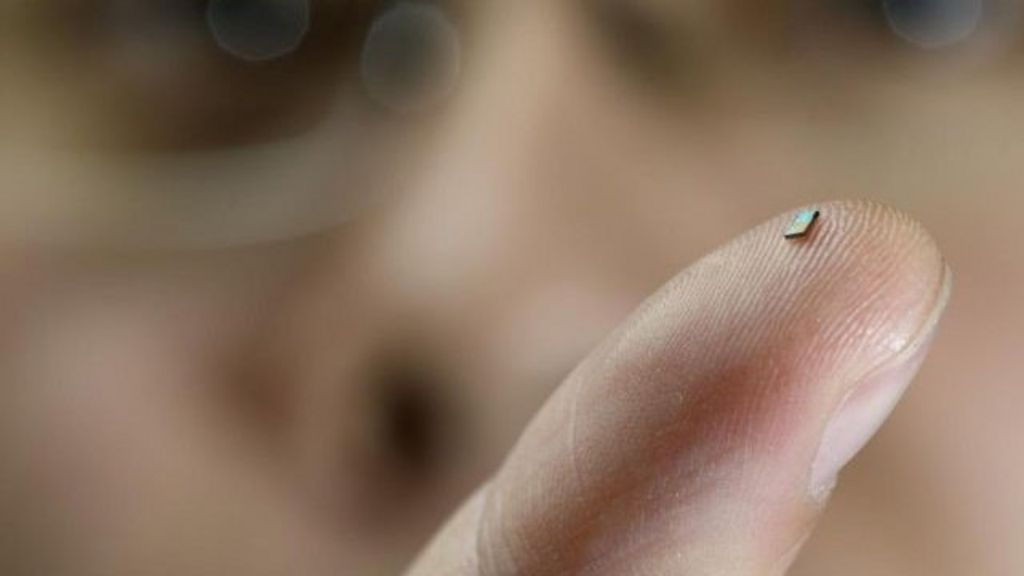
Tiny chip that powers itself from radio waves
Dutch scientists have developed a tiny sensor powered by the radio waves it uses to communicate information.
Such sensors could help advance the nascent Internet of Things industry, researchers at Eindhoven University of Technology said.
Increasingly tiny chips that measure temperature, light, and air pollution are being deployed around cities and in smart homes and offices.
One the biggest hurdles is to make these sensors battery-free.
"We don't want hundreds of these sensors around our homes if we have to go around swapping the batteries all the time," said lead researcher Prof Peter Baltus.
The sensor developed by his team measures temperature but similar sensors that measure light, movement and humidity could also be developed, he told the BBC.
The sensor measures just 2 sq mm and weighs 1.6mg.
Low cost
The sensor contains an antenna that captures energy from a wireless router. It stores the energy and, once there is enough, is able to measure the temperature and send a signal to the router.
Currently the chip has a tiny range - just 2.5cm but the researchers are confident that this can be extended to 1m.
"Theoretically it can work up to 5m," said Prof Baltus.
The sensor can operate beneath a layer of paint, plastic or concrete - making it ideal for incorporation into buildings.
It is also cheap and, according to Prof Baltus, the cost of an individual chip would be around 20 cents.
According to Gartner, the Internet of Things market is set to explode. It predicts that cities will have 1.6 billion connected things, smart buildings, 518 million and homes, one billion, in 2016.
Sunday, December 06, 2015
LeT operatives using hand-held radio devices configured with android'
At a time when, Intelligence Bureau (IB) and Delhi Police's special cell sleuths are carrying out a joint operation to nab at least three to four hardcore Lashkar-e-Taiba militants, who have managed to sneak in to Jammu & Kashmir from across the border, a secret document accessed by TOI, reveals that, LeT operatives are using highly advanced integrated communication handheld radio sets (ICOM HHRS) configured with android mobile phones.
In a two pages alert issued on December 3, by Intelligence Bureau to all the states police and other sister concerning intelligence agencies, the system enables LeT operatives to send text data packets on a particular frequency band, making almost impossible for agencies to tap the message.
As per alert note, an improvised version of 'goTenna', a cognitive digital radio (an antenna) combined with an app through an Android device via Bluetooth, generates its own signal and automatically coordinates with other units with range, is being used by LeT operatives.
This system is specially designed for connecting even when someone goes off-grid and far apart, in simple terms, one can connect and convey message without having SIM card in his smart phone.
A senior intelligence official told TOI, "The improvised version of 'goTenna' (ICOM HHRS) ?k?nown as 'Y-SMS' has been detected in Kashmir valley, which is being used by LeT operatives."
In a recent raid to hunt down terrorist in Kashmir, few damaged Samsung android phones have been recovered. An analysis of the phones by technical expert of intelligence bureau revealed, that they were being operated without SIM cards and text messages were sent by using ICOM HHRS system.
Further examination of the recovered phones revealed that, their printed circuit boards were modified, to such an extent that a simple touchscreen smartphone became sort of walkie talkie, where only pressing on screen helped the terrorist to send encrypted text and voice messages, stated the note.
A senior police official claimed, "LeT operatives who have entered in India are using this communication system, which is not easy to decrypt." By: Arvind Chauhan,
Source: http://timesofindia.indiatimes.com/
Humble radio turns lifeline for city in distress
The city rediscovered the charm and utility of the humble radio as several parts remained without power for three days. While those who had power supply watched the horror of the Chennai floods unfold on television, those suffering outages dusted their battery-run radio sets.
And the channels became sounding boards and helplines at the same time. People in distress called in to give their addresses, requesting for food, water and rescue teams. Several of the FM channels suspended their usual song-based programmes and ran non-stop commentaries on the flood situation.
"I have been a regular listener of radio, mostly to songs when I cook, but never before had I realised the power of the little box sitting atop my fridge," said S Devi, a resident of Alandur.
The live updates, which the channels gathered from listeners calling in, came as a boon to many who were stranded. There were loud cheers in the southern neighbourhoods when the radio announced by Friday noon the reopening of Saidapet bridge that connects Chinnamalai with Saidapet and Nandanam. The bridge was closed since Wednesday after water from the Chembarambakkam reservoir started gushing a few feet above it. Below, the huts had gone under the whirling water.
The FM channels doubled up as voice message boards, people who were without telephone connection conveying messages to their families, friends and relatives. RJs soldiered on for long hours, ensuring that the messages were loud and clear, and not just a cacophony of woes.
And then came donations from abroad, through the radio channels. S Rajesh, a Chennaiite settled in Chicago, collected $4,000 from his friends and sent it to a city FM channel for flood relief. FM companies, on their part, sent volunteers to the waterlogged areas to distribute food packets and medicines.
Source: http://timesofindia.indiatimes.com/
And the channels became sounding boards and helplines at the same time. People in distress called in to give their addresses, requesting for food, water and rescue teams. Several of the FM channels suspended their usual song-based programmes and ran non-stop commentaries on the flood situation.
"I have been a regular listener of radio, mostly to songs when I cook, but never before had I realised the power of the little box sitting atop my fridge," said S Devi, a resident of Alandur.
The FM channels doubled up as voice message boards, people who were without telephone connection conveying messages to their families, friends and relatives. RJs soldiered on for long hours, ensuring that the messages were loud and clear, and not just a cacophony of woes.
And then came donations from abroad, through the radio channels. S Rajesh, a Chennaiite settled in Chicago, collected $4,000 from his friends and sent it to a city FM channel for flood relief. FM companies, on their part, sent volunteers to the waterlogged areas to distribute food packets and medicines.
Source: http://timesofindia.indiatimes.com/
Saturday, December 05, 2015
In Chennai where communications are cut off, ham radio operators chip in
Ham radio operators have swung into action in flood-hit Chennai where communication network at several places was affected. In addition to Hams who have surfaced, having been caught in the flood waters themselves, to provide the required communication to carry out relief works, many more hams from across the country are ready to travel to Chennai.
Five hams from Hyderabad, 10 from West Bengal, eight from Kerala and some from Coimbatore are coordinating with the National Institute of Amateur Radio (NIAR) in Hyderabad.
"Everyone is ready to render their services. Many more are volunteering. The Tamil Nadu government should have a monitoring agency to fully utilize the services of hams. If the government is willing to do that, many hams from different parts of the country are eager to go to Chennai," S Rammohan, director of NIAR told TOI.
On Friday morning, Rammohan who goes by the call sign VU2MYH got in touch with hams in Chennai. "Hams there are networking among themselves and providing information for relief works to be taken up," he said.
For the first time in a major way, hams are not just sticking to providing information where other means of communication are not working, like telephones and mobiles, but also helping in relief works.
VU2DH has a shipping agency with branches in different parts of the country and his work would have kept him busy otherwise. But with the deluge in Chennai, Dev Das, got into the act to be of service to the public. "Water was flowing at 12 feet at the place where I am standing now. This has been the situation in the last three to four days. Today, the water has receded a bit and enabled us to come here," Dev Das told TOI from Chennai.
Dev Das was at a locality close to Jafferkhanpet, near the airport in Chennai. Another ham, VU2GMN, is also active providing communication network.
In all 20 hams are active in Chennai. "Sadly, we do not have government support. But we cannot keep quiet because we want to be of help to the people," Dev Das said. Not only did Dev Das cook food for 50 people at his residence to take to the flood affected people, he is also collecting food packets wherever they are available and distributing where necessary.
The 20 hams in Chennai have informally tied up themselves with someone from the National Disaster Response Force (NDRF). By SUSHIL RAO,
Source: http://timesofindia.indiatimes.com/
Five hams from Hyderabad, 10 from West Bengal, eight from Kerala and some from Coimbatore are coordinating with the National Institute of Amateur Radio (NIAR) in Hyderabad.
"Everyone is ready to render their services. Many more are volunteering. The Tamil Nadu government should have a monitoring agency to fully utilize the services of hams. If the government is willing to do that, many hams from different parts of the country are eager to go to Chennai," S Rammohan, director of NIAR told TOI.
For the first time in a major way, hams are not just sticking to providing information where other means of communication are not working, like telephones and mobiles, but also helping in relief works.
VU2DH has a shipping agency with branches in different parts of the country and his work would have kept him busy otherwise. But with the deluge in Chennai, Dev Das, got into the act to be of service to the public. "Water was flowing at 12 feet at the place where I am standing now. This has been the situation in the last three to four days. Today, the water has receded a bit and enabled us to come here," Dev Das told TOI from Chennai.
Dev Das was at a locality close to Jafferkhanpet, near the airport in Chennai. Another ham, VU2GMN, is also active providing communication network.
In all 20 hams are active in Chennai. "Sadly, we do not have government support. But we cannot keep quiet because we want to be of help to the people," Dev Das said. Not only did Dev Das cook food for 50 people at his residence to take to the flood affected people, he is also collecting food packets wherever they are available and distributing where necessary.
The 20 hams in Chennai have informally tied up themselves with someone from the National Disaster Response Force (NDRF). By SUSHIL RAO,
Source: http://timesofindia.indiatimes.com/
Amateur radio in flood-hit Chennai

HAM radio operator Ambarish Nag Biswas of Sodepur on the outskirts of Kolkata became a vital lifeline for many people keen to know about family members held incommunicado in Chennai. (HT Photo)
A steady stream of messages and news relayed from a home in suburban Kolkata kept many anxious people posted about relatives stuck in flood-ravaged Chennai, not with 21st-century technology but through its humble forefather — the radio.
HAM radio operator Ambarish Nag Biswas of Sodepur on the outskirts of Kolkata became a vital lifeline for many people keen to know about family members held incommunicado in the southern metropolis after record rain snapped all forms of communication there.
Amateur radio, popular as HAM, crackled to life after smart phones and laptops gave up in the face of power outages and a clogged grid.
Biswas, an employee with a private dairy firm, has been coordinating with fellow HAM operators in Chennai and Bengaluru, working round-the-clock to locate “missing” people despite language barriers.
“Somehow through friends people are getting to know about me. Calls are pouring in to find people in Chennai. After collecting details, I am connecting with HAM operators in Bangalore and Chennai, who in turn are getting me through to operators engaged in relief work on the streets of Chennai. They are trying to find the people and inform us about their condition,” he said.
Biswas has been a licenced amateur radio operator for 18 years and is a member of the amateur West Bengal Radio Club.
He picked the case of Somnath Barman, a native of Baranagar in Kolkata stationed in Manipur, to illustrate his work. Frantically looking for wife Rajarshi and 9-year-old daughter Sampriti, who are in Chennai, since normal communication broke down, Burman rang up Biswas on Thursday and sought his help.
“I contacted HAM operators in Bangalore and they got me through to operators in Chennai, who were distributing relief material. Around midnight, they visited Burman’s wife and daughter in Ramapuram. We were happy to know that both were safe and healthy. They are stranded on the second floor of their rented house. There’s no electricity and cell phones were not working either,” Biswas said.
He has learnt from his contacts the plight of the people. “Shortage of food and drinking water … no electricity. But we heard disaster management teams are doing a good job.”
Apart from Bengalis who have relatives in Chennai, members of the Tamil community in Sodepur have visited him for news. The daunting task was overcoming the language barrier. “I could not understand their language. I recorded their messages and sent them to Chennai HAM operators. They acted accordingly and tried to find the missing people.”
Biswas also used EchoLink, a software that allows licenced amateur radio stations to communicate with one another on the Internet, using audio-streaming technology.
HAM radio is both a hobby and a service in which participants, called hams, use various types of radio communications equipment to get in touch with other amateurs through airwaves for public services, recreation and self-training. An estimated 3million people throughout the world are regularly involved in amateur radio transmissions.
HAM radio operators have done a great job during devastating natural disasters such as the April-May Nepal earthquake, the Aila cyclone in West Bengal and the earthquake in Gujarat’s Bhuj.
Source: http://www.hindustantimes.com/
Wednesday, December 02, 2015
The magic of the radio

The radio is an absolute source of serendipity. Serendipity is a beautiful feeling and hence must be enjoyed sans compromise.
It didn’t take too long for me to give up television-viewing — for watching TV means loss of multi-tasking abilities. Event he advertisement slots that are supposed to give you a break from viewing, turns into a magnetic fixation to the couch — getting us to watch the ‘cinema-style’ advertisements. Surfing other channels, or worse, tuning into the ‘pre-channel’ mode also promote ‘couch-potatoism!’ Breaks in each of these previously set channels are apparently timed in such a way that when one channel decides to takes a break, the other is still on — quite complementary!
This, by the way, is no way a rant against TV, but a tribute to the humble radio. Over the years the radio has only changed for the better, with more FM stations being aired — not to mention the radio mobile app and internet radio. Luckily, the periphery hasn’t changed much unlike TV. By and large, the radio has been the best ambassador of music. While the visuals of the songs do the trick on TV, the radio is any day a better equivalent when it comes to promoting music — it reinstates the focus on the beats and lyrics, something quintessential to music. With the Prime Minister’s Mann Ki Baat gaining popularity, it feels as if we are getting back to those lessons taught in school years ago — of how the radio has mass reachh, especially in the deeper pockets of India.
Our radio turns out to be even simpler with programmes on Vividh Bharathi remaining unfettered. Thanks to a few FM stations too, playing their partwell by consistently serving daily doses of entertainment.
To me, radio is an absolute source of serendipity. Serendipity is a beautiful feeling and hence must be enjoyed sans compromise. Which is why I have a transistor through which I can even get medium wave and short wave stations. Even as I write this, I am tuned in to the radio — listening to Mandolin U. Shrinivas on medium wave.
Most of the Carnatic ragas are familiar to me, thanks to the programmes on MW and FM; all you need is the right tuning. The announcements are consistent, with of the raga, tala and composer announced ahead of each song.
With all the technology at our disposal, we could have our own play list to our heart’s content. But that doesn’t amount to serendipity! When the song you longed for is played on the radio, it is inexplicably blissful. When the ‘RJ’ announces any one of my favourite songs, I wonder what runs through their mind when the song is being played — are they enjoying it along with us, or are they busy lining up the next set of songs, or are they just not in their seats for some reason?
Whatever it is, they, I feel, are magnanimous — only because they spread so much cheer and joy in the minds of their listeners at different points of the day. I experience child-like delight when I phone in to these stations, requesting for songs — I thank them profusely and almost forget why I called. That’s exactly what serendipity can do to you!
By

Subscribe to:
Posts (Atom)