Tuesday, September 20, 2011
Wednesday, September 07, 2011
AWR Wavescan 2011 Contest Winners
Contest Results: Our Big 2011 "Choose a Channel" DX Contest

(Dr.Adrian Peterson Via Alokesh Gupta)
And now, here is the information you have been waiting to hear. In our program today, we present the results of the recent 2011 Wavescan DX contest that was conducted back during the month of June. The DX contest this year was organized to commemorate the 40th anniversary of Adventist World Radio, and it featured the listening and reporting of all of the stations that can be heard on one particular shortwave frequency, under the title "Choose a Channel" DX Contest. The history of Adventist World Radio goes way back to October 1, 1971, when AWR made its first broadcast on shortwave in a service originating out of Portugal and beamed towards various countries in Europe.
The awards for this year's contest are similar to all previous contests. There will be a special award for the world winner, one of the Jerry Berg radio history books; and World Radio TV Handbook 2012 for each continental winner. In addition, there will be other special awards as well as AWR souvenirs and radio curios for many participants.
You can remember that all AWR reception reports will be verified with a specially endorsed AWR QSL card. Please remember that it will take a period of many months, well into the new year 2012, to process all of the contest entries and reception reports, but each will in due course be processed.
There were two surprising facts exhibited in the contest entries this year. One was the magnificent quality of many of the top entries; and the huge number of reception reports included in this year's entries. One entrant submitted 63 reception reports, and two entrants both submitted 45 reception reports each.
And here now is the list of winners for our big 2011 "Choose a Channel" DX Contest:-
The awards for this year's contest are similar to all previous contests. There will be a special award for the world winner, one of the Jerry Berg radio history books; and World Radio TV Handbook 2012 for each continental winner. In addition, there will be other special awards as well as AWR souvenirs and radio curios for many participants.
You can remember that all AWR reception reports will be verified with a specially endorsed AWR QSL card. Please remember that it will take a period of many months, well into the new year 2012, to process all of the contest entries and reception reports, but each will in due course be processed.
There were two surprising facts exhibited in the contest entries this year. One was the magnificent quality of many of the top entries; and the huge number of reception reports included in this year's entries. One entrant submitted 63 reception reports, and two entrants both submitted 45 reception reports each.
And here now is the list of winners for our big 2011 "Choose a Channel" DX Contest:-
Awards of Merit
Gunter Jacob Passau, Germany - Top quality book production
Nobuya Kato, Fujisawa Japan
Sebastian Arndt, Remstadt Germany
Sziklai Jozsef, Baja Hungary
Claes Englund, Danderyd Sweden
Jose Jacob, Hyderabad India - Has entered every contest since 1977
Gunter Jacob Passau, Germany - Top quality book production
Nobuya Kato, Fujisawa Japan
Sebastian Arndt, Remstadt Germany
Sziklai Jozsef, Baja Hungary
Claes Englund, Danderyd Sweden
Jose Jacob, Hyderabad India - Has entered every contest since 1977

Girish Chadaga with Sanil Deep
Continental Winners
Southern Asia P. Girish Chadaga Bangalore India
East Asia Hideo Suzuki Kiyosu Japan
Asia - Other Areas Tony Ashar Depok Indonesia
Europe Hans V. Lollike Hedehusene Denmark
South America Jorge Luis Medina Punto Fijo Venezuela
South Pacific Bruce White Karoonda SA Australia
North America Edward Insinger Summit NJ USA
Southern Asia P. Girish Chadaga Bangalore India
East Asia Hideo Suzuki Kiyosu Japan
Asia - Other Areas Tony Ashar Depok Indonesia
Europe Hans V. Lollike Hedehusene Denmark
South America Jorge Luis Medina Punto Fijo Venezuela
South Pacific Bruce White Karoonda SA Australia
North America Edward Insinger Summit NJ USA
World Winner
William Patalon Fallston MD USA
William Patalon Fallston MD USA
(Dr.Adrian Peterson Via Alokesh Gupta)


Sunday, September 04, 2011
Icom IC-R71A for sale

Icom IC-R71A for sale.
Rs. 9000/-
Soled
Contact ardicdxclub (at) yahoo (dot) co (dot) in
DX meet at Kolkata
Veteran & newbies join for a DX meet at Kolkata, read the story here :
http://idxci.blogspot.com/2011/09/putting-dx-army-together-kolkata.html
----
Alokesh Gupta, VU3BSE
New Delhi
http://idxci.blogspot.com/2011/09/putting-dx-army-together-kolkata.html
----
Alokesh Gupta, VU3BSE
New Delhi
Dynamo AM/FM Radio
 |
| INQUIRE NOW |
Dongguan Haitong Plastics Electrical Factory

Dxers Guide July-September 2011

Dxers Guide is on the way to all the subscribers.
Those who are want a sample copy, may send Rs. 25/-
MO or mint stamp to the following address.
Annual Subscription Rs. 80/-
T. Jaisakthivel
B90/G2, Mahalakshmi Apts,
7th Cross Street,
Maharaja Nagar,
Tirunelveli - 627 011,
Tamil Nadu,
India.
Friday, September 02, 2011


Radio Prague marks 75 years
Radio Prague marks 75 years on air
Adapting to change: 75 years of Radio Prague broadcasts
Radio Prague listeners send well-wishes on Radio Prague's 75th birthday
Radio Prague to suffer no budget cuts in 2012
---
Alokesh Gupta,VU3BSE
New Delhi
New DRM radios
MSway receiver exclusive!
Source: http://drmna.bcdx.org/wp/?p=856#more-856 Here is our interview with Ms. Marticia Jo, PR manager of MSway:
Q. How long has the MSway DRM receiver been under development?
A. Actually we have started DRM business from 2011. We already made products for T-DMB and DAB and we have been probing DRM market for many years doing government funded projects.
Q. Do you have any development / R&D partners?
We have worked with the lab of Hansin University for years in digital radios.
There is a government funded research institute called KETI (Korean Electronic Technology Institute) and this institute has invested a lot of time and effort for digital broadcasting for several years. They have developed various technologies for almost all global standards and transfer their developed technology to commercial sectors. That's why this institute is funded and audited by government.
MSway licensed KETI's digital radio technology and decided to produce commercial products. Even though we do not have a long history in DRM, the technology and experience from KETI have planted into MSway for DRM and we are confident to deliver commercial products.
Q. What makes the MSway receiver unique?
A. First of all we will make the device affordable. Currently the commercialized DRM radios made by a few companies are too expensive. we will focus on good reception & audio quality with core functions. At the moment we do not have plan to make the device heavy (i.e. equipped with multimedia functions). We will release the basic types of products but we can make customized models upon customers' requests.
We have developed both receivers and monitoring systems (analyzer) and it will enhance the quality of receivers.
Especially the USB type can be extended to HAM communication with antenna change.
 Q. What is the main market for the receiver? Will it be available in the USA/North America?
A. Currently we are informed that India officially will launch DRM. Therefore the immediate demand in India is quite promising. Also Brazil and Russia is reviewing DRM for the official launch and DRM consortium people are promoting DRM in those countries. We naturally should aim the markets that have plans to start DRM broadcasting officially like India, Brazil and Russia.
There is a lot of interest from Europe and Australia and we will go to the markets with high interests.
North America? Why not? If there is demand, we will look into the possibilities to launch our products. However we need to study the market very carefully.
Q. Do you have any projected production run and time-frame for the first model/models?
We are getting some actual requests from broadcasters and local distributors in different countries. Throughout IBC show in September we will meet more potential customers for commercial productions.
We have decided to emphasize on the DRM reception with good audio quality to go into the market quickly. Other multimedia functions and other data service function can be added by customers' requests later on. Our ultimate goal at the moment is "spread affordable DRM radios as soon and as many as possible". We will offer both module type and final product type and the customers can decide their release time and date.
If we can meet some actual buyer during the IBC show, we have a time-line to deliver the products within 15 weeks.
We also have a monitoring system for broadcasters and other professionals. KETI have completed field tests in India this year and all the participants and local broadcasters were impressed by the reception and functions.
It is the only monitoring solution supporting both DRM30 and DRM+ at the same time.
We have revised commercialized DAB tuner into DRM tuner and it gave us an exceptional reception result compare to other competitors' products. With KETI's experience in DAB & DAB+ we will create the version with DAB, DAB+ test as well.
 I also have something new to share with you. In Korea we started a new government funded project called "WWR (World Wide Radio)". I was also involved in this project when it was proposed last year.
A group of professionals in various sections (I was representing Marketing part) teamed up and wrote a proposal to "Ministry of Information and Economics" in Korea and the government body evaluated submitted proposals and selected some projects to support funds.
This "WWR project" is targeting to produce the chipset which can supports all different global digital radio standards.
The result of project will be producing a chipset that able to receiver DAB, DAB+, DRM, DRM+ and more at the same time within 2 years.
I hope we, MSway, can get benefit out of this project soon.
Q. Could you please give us some background about yourself and MSway?
I studied sociology in a university in Korea and Hotel management in the Lausanne Hotel School, Switzerland, worked in Sweden and England as an hotelier. I have worked in service industry dealing with overseas businesses for 10 years.
Surprisingly I could have started my second career in IT industry as a global marketer. I have been involved in data broadcasting software solutions for digital radio and mobile TV. Starting with DAB, I have promoted solutions in different territories of the world for DVB-T/H, ATSC-MH, T/S-DMB and HD radio. Also I have been involved in some government projects in Korea & Singapore for digital radio. Now I am promoting DRM and I am very proud of being a professional in Digital radio industry.
MSway has been strong in Embedded solution of multimedia chip modules. Our CEO, Mr. M.S. Lee, started MCU application module business for Automotive, medical and Industrial products. Since then we have expanded our business area to PAN(Personal Area Network) and portable multimedia devices.
We have produced PND, PMP with mobile TV and radio functions. Based on our technology & experiences we are planning to create more services & products for Broadcasting-telecommunication convergence.
Thank you so much Ms. Jo for this DRMNA exclusive interview. Please extend our thanks to the whole MSway team. DRM enthusiasts in North America (as well as those worldwide) are awaiting the arrival of MSway receivers!
Thanks to Alokesh Gupta
Sunday, August 28, 2011
BBC World Service relaunches Tamil website
The BBC World Service has relaunched its Tamil website, with new design and features, including enhanced content-sharing functions, a mobile version and an access to archived radio programmes. Revamped bbctamil.com has a wider format, featuring more convenient and detailed content categorisation. Enhanced with the ability to host video stories, the site also features image galleries, a press release from the BBC said.
In addition to the day's radio programmes, users can now listen to archived materials for up to seven days from the day of the broadcast. They can also share content via online social networking sites such as Facebook and Twitter.
BBC Tamil Editor Thirumalai Manivannan said his team is looking forward to even better engagement with the Tamil-speaking online community. "The re-launched bbctamil.com provides the stories and features in a better organised, more consistent and user-friendly way, which, we believe, will make people want to come back to us. And the ever increasing number of those who engage in online social networking will welcome our new content-sharing features," he added.
Every week, about 690,000 people listen to BBC Tamil broadcasts. The BBC's special Tamil-language infotainment output for India's FM market includes sports, business and showbiz bulletins and is available in Chennai via partner station, Big FM.
(Source: Press Trust of India via outlookindia.com/R Netherlands Media Network Weblog)
Friday, July 29, 2011
DX Programmes
Saturday
0000 Allan Weiner Worldwide WBCQ 5110,74150235 DX Programme Radio Bulgaria 9700,11700
0245 DXers Special Supplement R.A.E. 11710
0730 Wavescan WRMI 9955
1210 World Wide Friendship KBS World Radio 9650
1245 DX Corner Voice of Turkey 15450 bi-weekly
1430 Wavescan WRMI 9955
1600 Australian DX Report WWCR 12160
1615 Ask WWCR WWCR 12160
1630 Wavescan WWCR 121601800 QSO WTWW 9479
2100 Wavescan WRMI 9955
2215 DX Corner Voice of Turkey 9830 bi-weekly
Sunday
0020 Radio Waves Radio Exterior de España 6055
0145 Ask WWCR WWCR 4840
0315 DX Corner Voice of Turkey 9515 bi-weekly
0400 DXing With Cumbre WHRI 9825
0500 Wavescan WRMI 9955
0730 DXing With Cumbre WHRI 11565
0945 Ask WWCR WWCR 4840
1430 Int'l Radio Report CKUT Montreal www.ckut.ca
1430 Wavescan WRMI 9955
1915v DXers Unlimited Radio Habana Cuba 11760
2315v DXers Unlimited Radio Habana Cuba 5040
Monday
0115v DXers Unlimited Radio Habana Cuba 6000, 6050
0215v DXers Unlimited Radio Habana Cuba 6000, 6050
0315v DXers Unlimited Radio Habana Cuba 6000, 6050
0330 International Radio Report WBCQ 5110
0415v DXers Unlimited Radio Habana Cuba 6000, 6050
0515v DXers Unlimited Radio Habana Cuba 6000,6010,6050,6060,6150
0615v DXers Unlimited Radio Habana Cuba 6000,6010,6050,6060,6150
0730 Mailbox RNZI 6170 bi-weekly
1130 Mailbox RNZI 9655 bi-weekly
1145 Australian DX Report WWCR 15825
1245 Ask WWCR WWCR 15825
1330 Mailbox RNZI 6170 bi-weekly
1500 Wavescan WRMI 9955
1630 Mailbox RNZI 7440 bi-weekly
2100 Wavescan WRMI 9955
Tuesday
0025 Radio Waves Radio Exterior de España 5970
0330 Mailbox RNZI 15720 bi-weekly
1935v DXers Unlimited Radio Habana Cuba 11760
2335v DXers Unlimited Radio Habana Cuba 5040
Wednesday
0135v DXers Unlimited Radio Habana Cuba 6000,6050
0235v DXers Unlimited Radio Habana Cuba 6000,6050
0335v DXers Unlimited Radio Habana Cuba 6000,6050
0435v DXers Unlimited Radio Habana Cuba 6000,6050
0535v DXers Unlimited Radio Habana Cuba 6000,6010,6050,6060,6150
0635v DXers Unlimited Radio Habana Cuba 6000,6010,6050,6060,6150
1725 Multitouch Polish Radio 9770
Thursday
0245 DXers Special Supplement R.A.E. 11710
0300 Wavescan WRMI 9955
1225 Multitouch Polish Radio 11675
1430 Wavescan WRMI 9955
Friday
1530 Wavescan WRMI 9955
1725 Multitouch Polish Radio 9770
2030 Mailbox RNZI 11725 bi-weekly
2135 DX Programme Radio Bulgaria 5900,7400
2335 DX Programme Radio Bulgaria 9700,11700
(ODXA/Aug 2011 Via Gayle Van Horn)
Sunday, July 17, 2011
Prasar Bharati seeks free land to boost AIR's FM network
New Delhi: Capitalising on the government's strength to stay in competition with the private FM radio broadcasters, public broadcaster Prasar Bharati has sought free land from all state governments to set up its own 500 AIR FM channels (two per city) in over 250 towns. The idea is to operationalise AIR's FM radio stations before the private media firms launch their own FM stations after the government cleared third-phase expansion of private FM radio policy recently which envisages setting up of 839 FM station across 313 towns.
Full story at :
http://www.financialexpress.com/news/prasar-bharati-seeks-free-land-to-boost-airs-fm-network/818959/0
---
Alokesh Gupta, VU3BSE
New Delhi
Full story at :
http://www.financialexpress.com/news/prasar-bharati-seeks-free-land-to-boost-airs-fm-network/818959/0
---
Alokesh Gupta, VU3BSE
New Delhi
Tuesday, July 12, 2011
Deutsche Welle will be discontinuing the shortwave broadcast
According to their press release of May 18th (http://dwelle.de/dw/article/0,,6529299,00.html) "Deutsche Welle will be discontinuing the shortwave broadcast for German, Russian, Farsi and Indonesian on November 1, 2011. For English, the shortwave broadcast will be limited to Africa. The broadcasting times for Chinese programming will be reduced from 120 minutes to 60 minutes. Starting in November, DW will only be broadcasting radio programming via shortwave in the following languages: Amharic, Chinese, Dari, English and French for Africa, Hausa, Kiswahili, Pashtu, Portuguese for Africa and Urdu."
"The shortwave program currently broadcasts 260 hours daily with DW's own or rented relay stations – with the new focus on Africa and regions in Asia that will be reduced to just 55 at the beginning of the winter season. Only the relay station in Kigali (Rwanda) will be needed for shortwave broadcasts in Africa. The stations in Trincomalee (Sri Lanka)
and Sines (Portugal) can no longer be used to capacity. The financial operation is no longer possible and the relay stations will stop being used on November 1, 2011 and closed at the next possible point in time." A very strange situation that they are going to close down their German Service completely - no shortwave broadcasts anymore for German expatriates, businessmen or tourists. (Bethge via EDXP). Cf. DX-Window no. 429. (Ed)
"The shortwave program currently broadcasts 260 hours daily with DW's own or rented relay stations – with the new focus on Africa and regions in Asia that will be reduced to just 55 at the beginning of the winter season. Only the relay station in Kigali (Rwanda) will be needed for shortwave broadcasts in Africa. The stations in Trincomalee (Sri Lanka)
and Sines (Portugal) can no longer be used to capacity. The financial operation is no longer possible and the relay stations will stop being used on November 1, 2011 and closed at the next possible point in time." A very strange situation that they are going to close down their German Service completely - no shortwave broadcasts anymore for German expatriates, businessmen or tourists. (Bethge via EDXP). Cf. DX-Window no. 429. (Ed)
Monday, July 11, 2011
The ‘haunted’ past of Radio Ceylon
 by Chamari SENANAYAKE
Walking into the Sri Lanka Broadcasting Corporation (SLBC) buildings at Torrington Square, one would immediately feel the historical value of the place, but most people would not know just how valuable it is. Our SLBC is Asia's first broadcasting corporation. Radio Ceylon started in Sri Lanka then Ceylon, paving the way for many other radio stations that later came to be celebrated around the world, inspiring countries such as Hong Kong, Korea, India and Singapore to enter the world of wireless media.
DG of SLBC Samantha Weliweriya said that there was even speculation that the SLBC is the world's second radio station. Even if such speculation is not true, he said it is an indication of the importance of Radio Ceylon in the world arena. Radio Ceylon definitely becomes the 30th station in the world, in a line dominated by mostly American and British radio stations, bringing immense pride to Sri Lanka.
And that's not all, there is a hidden past behind the place now occupied by the radio station. According to Chairman Hudson Samarasinghe, who joined the SLBC many decades ago, and has been there ever since, the area was used as a runway during World War II.
The racecourse next to Radio Ceylon was used by the military and some parts of the Radio Ceylon grounds were frequently used for aviation activities which made it difficult to carry out broadcasting functions. Another interesting historical fact is that Radio Ceylon's broadcasting activities were taken over by Allied Forces during World War II and when the war was over, it was handed back to the government.
History began with the arrival of Edward Harper during the time of Sir William Henry Manning. He was the chief engineer of the Telegraph Department and soon began working on wireless broadcasts. The very first experimental broadcast hit the airwaves as early as 1923. Not many people know this fact and believe that the first experimental broadcast was actually made in 1924, but the world had heard us a year earlier from the Telegraph Department, just three years after the inauguration of broadcasting in Europe. Harper and his assistants had broadcast gramophone music as an experiment using radio equipment from a captured German submarine.
Broadcasting heights
The actual launch of Radio Ceylon was in December 1925 by Sir Hugh Clifford. The station came into being after the war and reached broadcasting heights in South Asia, leading the way in the world of entertainment and news. The very first senior management officers of the station came from the British Broadcasting Corporation (BBC). They worked tirelessly to make Radio Ceylon world-recognised, and it indeed was then.They even did a live coverage of the moon landing and used to cover all major cricket matches before Rupavahini launched its live sports telecasts. Talking about his Western inspirations and knowledge, Salman Rushdie had once said, "I have to express my deep gratitude to what was then called Radio Ceylon. It had a slightly more open attitude and did play Western music, so that's where I became familiar with all kinds of things that I could slightly regret, like the complete works of Ricky Nelson."
Going back to the hidden and interesting past behind the place now known as SLBC, one could not help but mention the word 'haunted'. The old buildings there are over 150 years old and once was home to a lunatic asylum. Standing proud and beautiful even today are the straight and long corridors created especially for the use of a hospital. These corridors have seen many old-fashioned trolleys, mobile beds and other hospital equipment being pushed along by attendants and nurses.
They create a labyrinth inside the institution and even the people most familiar with the place could easily get lost. Some say that staff that work in the evenings and nights have heard peculiar sounds in the dark and isolated corners. Although these are mostly hearsay and speculation, the history behind the place is quite fascinating and could create credible grounds for such stories.
Asylum proper
The Colombo Lunatic Asylum was the first mental hospital in Sri Lanka and was built on the grounds that are now used by the SLBC. Most of its records run as far as 1850, but the very first buildings could have been built many years or decades before that.It was divided into the asylum proper and the house of observation. Usually, about 700 patients were treated each year at the beginning of the 1900s. Even during the 19th century, in any given year, the number of patients treated always stood above 500.
There was one recorded escape in 1905, but the escapee was later found and brought back. Around the same time there was one attempted suicide. During the first decade of the 20th century, a separate dining hall for females and a dispensary were built. Work on a new mental lunatic asylum began in 1920 at Angoda.
From the beginning, the Colombo Lunatic Asylum was overcrowded and the accommodation provided was inadequate. It was the only mental facility in the country and the superintendent could not turn people away and had to take all patients that came in.
The mortality rate was high and remained above 50 each year. Almost all deaths were due to TB and some were due to malaria. Over 300,000 people are believed to have died of malaria around the 1930s in Sri Lanka.
Torrington Square, Colombo 7, Colombo 5 and the surrounding areas were bushland then, and were known as Kumbi Kele (ant forest) and the asylum grounds were quite large. Therefore, a corner of the land was also used as the hospital's cemetery for bodies that were not claimed by families.
The hospital had a large mortuary; this room is still there but remains closed. Berty Galahitiyawa, a veteran announcer joined the SLBC in 1962, and retired as Director-Training. He recalls the cafeteria in the '60s which was near the mortuary, and some of his friends talking about hearing strange sounds emanating from it while they were having their tea breaks during the evening's broadcast. “We did not believe it, but we knew there was a closed-down mortuary adjacent to the cafeteria. Later on, many studios were built around it” he said.
Eerily silent
Ironically, there is a cafeteria there even today.Frederick Fiebig was originally an artiste and lithographer in Calcutta in the 1840s. When he visited Sri Lanka in 1852 he had taken a black and white picture of the SLBC which was later hand-coloured.
Even today, its long corridors are eerily silent with memories of the past, not merely because of the way it was built for patient transport.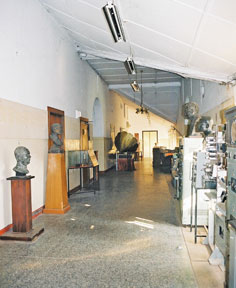
There are framed photographs of legends in broadcasting and other important figures that were associated with the place. Sunil Shantha, Rukmani Devi, Ananda Samarakoon and Premakeerthi de Alwis are some of those who are no more .
In 1954, when Queen Elizabeth II visited Sri Lanka, a Radio Ceylon van equipped with a disc-cutting machine was sent along with her to record the important events.
An interesting fact about Radio Ceylon is that after conquering Mount Everest, Edmond Hillary and Tenzing Norgay turned on their transistor radio and the first thing they heard was an overseas broadcast on the English All Asia service of Radio Ceylon.
The place now known as SLBC, most fondly remembered as 'Radio Ceylon' is a legend of its own with a colourful, eerie and romantic past.
(Source:http://www.sundayobserver.lk/2011/07/10/spe01.asp)
Subscribe to:
Posts (Atom)